Validation is where Behaviour-Driven Development either earns trust or quietly loses it.
Teams can spend time agreeing behaviour and writing clear scenarios, but without visible validation those scenarios don’t carry much weight. If people can’t see what has actually run — and what the outcome was — BDD starts to feel theoretical rather than reliable.
In Jira-based teams, validation works best when execution and traceability are visible alongside the work itself. This article looks at how BDD validation works in practice, where it often breaks down, and how keeping execution and traceability in Jira helps teams make better delivery decisions.
What Validation Means in BDD
Validation in BDD is about confirming that the behaviour described in scenarios actually holds true.
That can happen in different ways:
-
through automated execution
-
through manual execution
-
or a combination of both
What matters is not how validation is performed, but that:
-
the outcome is recorded
-
the result is visible
-
and the behaviour can be trusted
Validation answers a simple question:
Has this behaviour actually been checked, and what was the result?
Where BDD Validation Commonly Breaks Down
In many teams, validation does happen — just not where it’s easy to see.
Common problems include:
-
Automated results living only in CI tools
-
Manual test outcomes recorded in spreadsheets
-
Execution status disconnected from Jira stories
-
No clear link between scenarios and validation results
At that point, teams know tests ran, but they can’t easily answer:
-
which scenarios passed or failed
-
what behaviour is still unvalidated
-
whether failures relate to current work
Validation becomes fragmented, and confidence in the results drops.
Why Validation Needs to Happen in Jira
Jira is where delivery decisions are made. If validation outcomes aren’t visible there, they don’t meaningfully influence planning, prioritisation, or release decisions.
Keeping validation in Jira allows teams to:
-
see execution status alongside user stories
-
discuss failures in context
-
avoid relying on screenshots or external reports
-
share a single view of what has been validated
This matters not just for testers, but for product owners and delivery leads who need to assess risk quickly.
Executing BDD Scenarios with AssertThat
AssertThat supports validation by allowing teams to execute BDD scenarios directly within Jira.
This includes:
-
manual execution of scenarios
-
visibility of execution status per scenario
-
clear indication of pass, fail, or not run
Execution results are tied directly to the scenarios they validate, keeping behaviour and outcome linked.
For teams using automation, AssertThat also supports importing automated execution results so that both manual and automated validation are visible in one place.
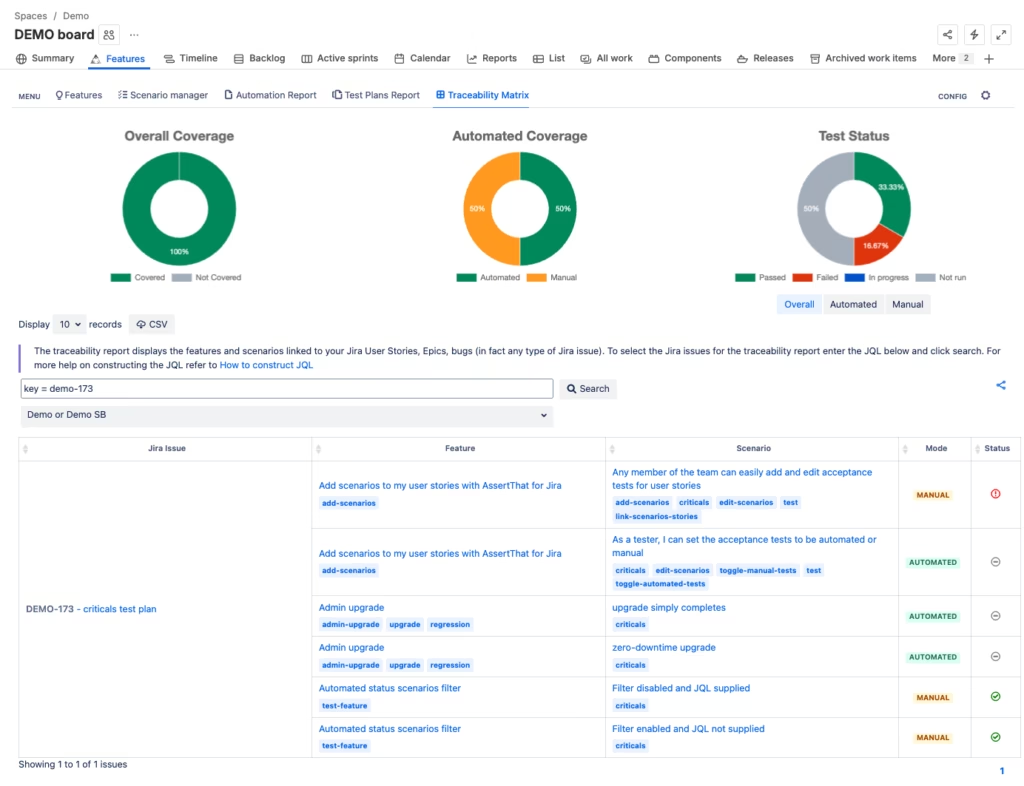
Understanding Validation Through Traceability
Execution alone isn’t enough. Teams also need to understand how validation maps back to delivery work.
This is where traceability becomes critical.
AssertThat’s traceability reporting allows teams to:
-
see which scenarios are linked to which Jira issues
-
understand coverage at a story or feature level
-
view execution status across linked scenarios
-
distinguish between manual and automated validation
Rather than inferring coverage, teams can see it directly.
Using Traceability to Support Delivery Decisions
Traceability is not just for audits or reporting. In practice, it supports day-to-day decisions.
Teams use traceability views to:
-
identify stories with no validated scenarios
-
spot behaviour that has failed recently
-
review validation status before release
-
focus testing effort where it matters most
Because this information lives in Jira, it’s accessible to everyone involved in delivery — not just those running tests.
Why Validation Builds Confidence in BDD
BDD only works if people trust it.
That trust comes from being able to see:
-
what behaviour was described
-
how it was validated
-
and what the outcome was
When validation and traceability are visible, BDD scenarios become reliable reference points rather than theoretical specifications.
Final Thoughts
Validation is where BDD moves from intention to evidence.
By executing scenarios and surfacing traceability directly in Jira, teams maintain confidence in what has been checked and what remains uncertain. That clarity supports better conversations, better decisions, and more predictable delivery.
BDD scenarios don’t need to be perfect — but their validation needs to be visible.