
Agile Behaviour-Driven Development BDD in Jira
Behaviour-Driven Development (BDD) is a collaborative Agile practice that helps teams define, build, and validate software behaviour using shared, human-readable examples. By focusing on behaviour rather than implementation, BDD improves alignment between business stakeholders, developers, and testers.
In modern Agile environments, BDD is commonly used alongside tools such as Jira and Cucumber. However, many teams struggle to apply BDD consistently at scale. Scenarios often live outside Jira, collaboration breaks down as projects grow, and maintaining traceability between requirements, behaviour, and test results becomes increasingly difficult.
This page explores how Agile teams practise BDD in Jira today, where the common gaps appear, and how newer approaches — including AI-assisted BDD — are helping teams improve consistency, coverage, and collaboration across their delivery workflows.
Agile Behaviour Driven Development: What It Is and Why It Matters?
Behaviour-Driven Development (BDD) is an Agile methodology that focuses on describing software behaviour from the perspective of its users. Instead of starting with technical implementation, teams define behaviour collaboratively using concrete examples.
In Agile teams, BDD helps to:
Create shared understanding between product owners, developers, and testers
Reduce ambiguity in user stories and acceptance criteria
Validate behaviour early, before development begins
Support iterative delivery through clear, testable examples
BDD scenarios are typically written in a structured, readable format such as Gherkin, making them accessible to both technical and non-technical stakeholders. This makes BDD particularly effective in Agile environments where rapid feedback and alignment are essential.
→ Read more: BDD explained for Agile teams
Practising BDD in Agile Teams: Jira, Cucumber and the Gaps
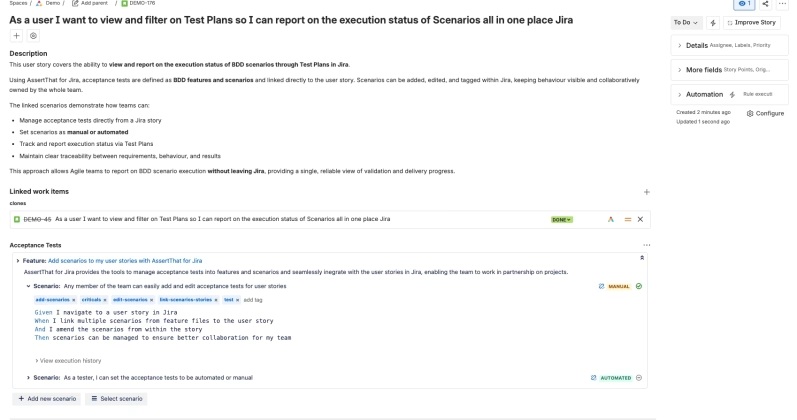
Most Agile teams manage their work in Jira — but BDD often lives elsewhere.
Tools like Cucumber are commonly used to automate BDD scenarios and validate behaviour. While Cucumber is effective for execution, it does not address several practical challenges teams face, including:
Keeping scenarios visible to non-technical stakeholders
Linking scenarios directly to Jira issues and requirements
Managing scenarios across multiple projects
Maintaining traceability between behaviour, tests, and results
As a result, BDD artefacts often become fragmented across feature files, repositories, and test reports, reducing visibility and making collaboration harder.
Effective Agile BDD requires more than scenario execution — it requires managing behaviour as a first-class part of delivery within Jira workflows.
→ Read more: Practising BDD in Jira: where Agile teams struggle
AI Driven BDD for Agile Teams
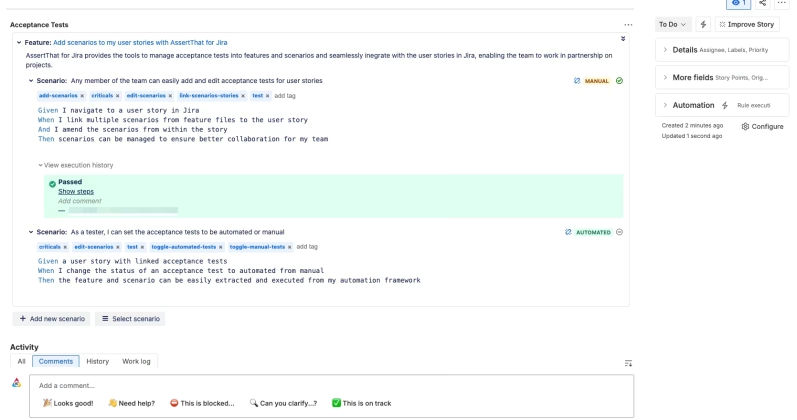
As Agile systems grow in complexity, one of the biggest challenges with BDD is scale. Writing, maintaining, and refining scenarios takes time, and teams often struggle to keep BDD assets aligned with changing requirements.
AI-driven BDD helps reduce this friction by supporting teams with:
Generating initial scenarios from requirements or user stories
Improving consistency across large scenario sets
Identifying gaps in behavioural coverage
Supporting non-technical stakeholders in contributing scenarios
AI does not replace collaboration. Instead, it helps teams spend less time maintaining scenarios and more time discussing behaviour — making BDD more sustainable in fast-moving Jira environments.
→ Read more: AI-Driven BDD: Using AI to generate and refine BDD scenarios
Scaling Agile BDD in Jira
To scale BDD effectively in Jira, Agile teams need both good practices and the right level of support.
Common best practices include:
Keeping scenarios business-focused and readable
Treating BDD as a collaboration practice, not just a testing technique
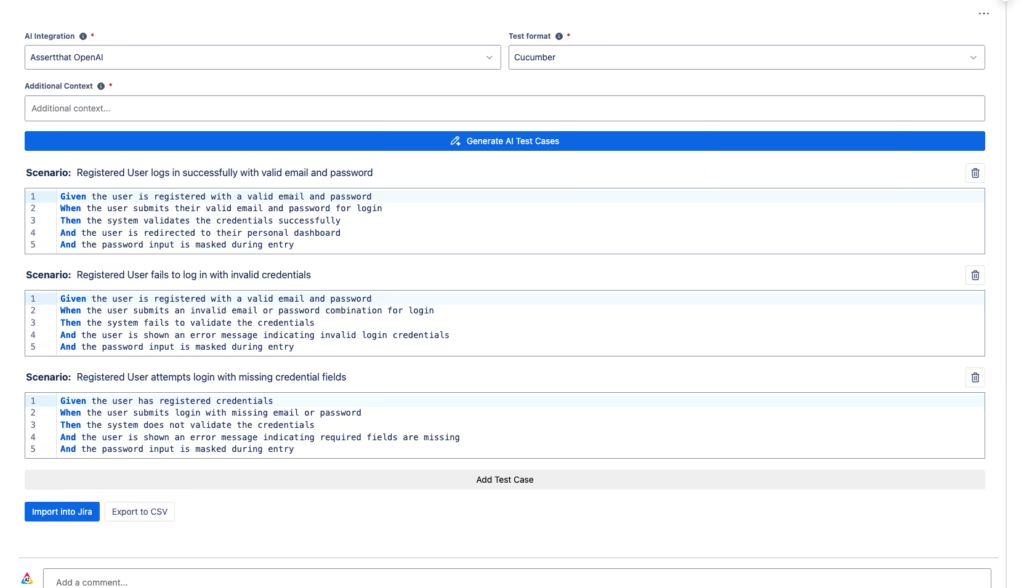
Maintaining clear links between Jira issues, scenarios, and tests
Supporting both manual and automated validation
Continuously refining scenarios through feedback
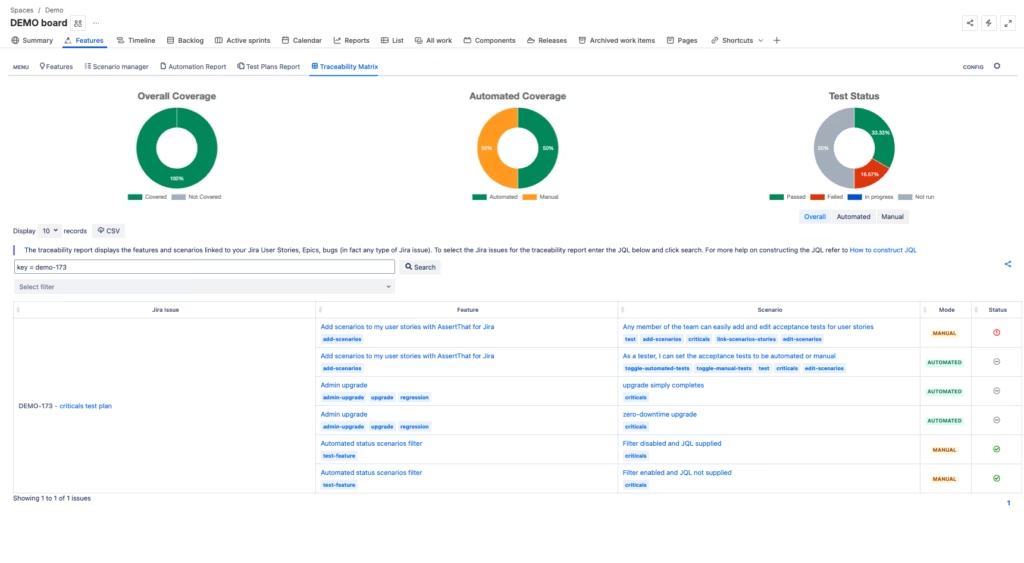
AssertThat supports Agile teams practising BDD by providing a central place in Jira to manage scenarios, link them to requirements, and view manual and automated test results. This helps teams maintain visibility, traceability, and shared understanding as their BDD practices scale.
→ Read more: Scaling Agile BDD in Jira Without Losing Collaboration
No. BDD is primarily a collaboration and specification practice. Automation can support validation, but it is not required to adopt BDD.
No. Cucumber is one way to automate BDD scenarios, but BDD itself is a methodology, not a tool.
BDD works best in Jira when scenarios, requirements, and test results are linked and visible within the same delivery workflow.
Yes. BDD scenarios are written in a human-readable format so that business and technical stakeholders can collaborate on defining behaviour.
AI can assist with generating, refining, and maintaining BDD scenarios, while humans remain responsible for reviewing and validating behaviour.
Ready to transform your BDD experience in Jira?
Start your free trial today or connect with our experts to learn how AssertThat can streamline your BDD processes