Scaling BDD in Jira often starts with good intentions. Teams collaborate, scenarios are discussed, and behaviour is clearly understood. The challenge appears later — when teams grow, projects multiply, and delivery becomes more complex
At that point, BDD can either mature into a shared, scalable practice, or quietly degrade into a set of artefacts that exist but are no longer trusted. This article looks at why BDD becomes difficult to scale in Jira, and what Agile teams do differently when they get it right.
Why BDD Breaks Down as Teams Scale
Most scaling problems in BDD are not caused by the methodology itself. They are caused by how behaviour is managed as delivery expands. As organisations grow, scaling BDD requires clearer ownership, shared standards, and consistent visibility across teams.
Common symptoms include:
-
Scenarios owned by individuals rather than teams
-
Inconsistent structure and language across projects
-
Duplication of similar behaviours in multiple places
-
Limited visibility for product owners and delivery leads
-
Difficulty understanding what behaviour has actually been validated
As more teams contribute scenarios, confidence in BDD assets often drops. Scenarios exist, but they are no longer clearly connected to delivery decisions.
The Importance of Visibility in Jira
For most Agile organisations, Jira is the system of record for delivery. When behaviour is managed outside Jira, it quickly becomes disconnected from planning, prioritisation, and release decisions.
Teams that scale BDD successfully ensure that:
-
Behaviour is visible alongside user stories and requirements
-
Scenarios are easy to find and understand
-
Stakeholders can see what behaviour has been covered and tested
-
Delivery decisions are informed by evidence, not assumptions
Without this visibility, BDD becomes a technical activity rather than a collaborative one.
Balancing Manual and Automated Validation
As teams scale, there is often pressure to automate everything. While automation is valuable, it is not always the right answer for every scenario.
Mature Agile teams recognise that:
-
Some behaviours are best validated manually
-
Others benefit from automated regression coverage
-
Both forms of validation contribute to confidence
Scaling BDD means supporting both manual and automated validation in a consistent way, without fragmenting reporting or ownership.
Maintaining Consistency Across Teams
One of the hardest aspects of scaling BDD is maintaining consistency.
Teams that succeed tend to:
-
Agree on shared conventions for writing scenarios
-
Review and refine scenarios regularly
-
Treat BDD scenarios as living assets, not one-off artefacts
-
Encourage cross-team visibility and reuse
This consistency does not come from strict enforcement, but from shared understanding and practical guidance.
Scaling BDD Is an Organisational Challenge
It is tempting to think of scaling BDD as a tooling problem. In reality, it is an organisational one.
BDD scales when:
-
Behaviour is treated as a first-class delivery concern
-
Ownership is shared across roles
-
Scenarios remain readable and meaningful
-
Evidence of validation is visible where decisions are made
Tools can support this, but they cannot replace clear practices and accountability.
Evidence-Based Delivery at Scale
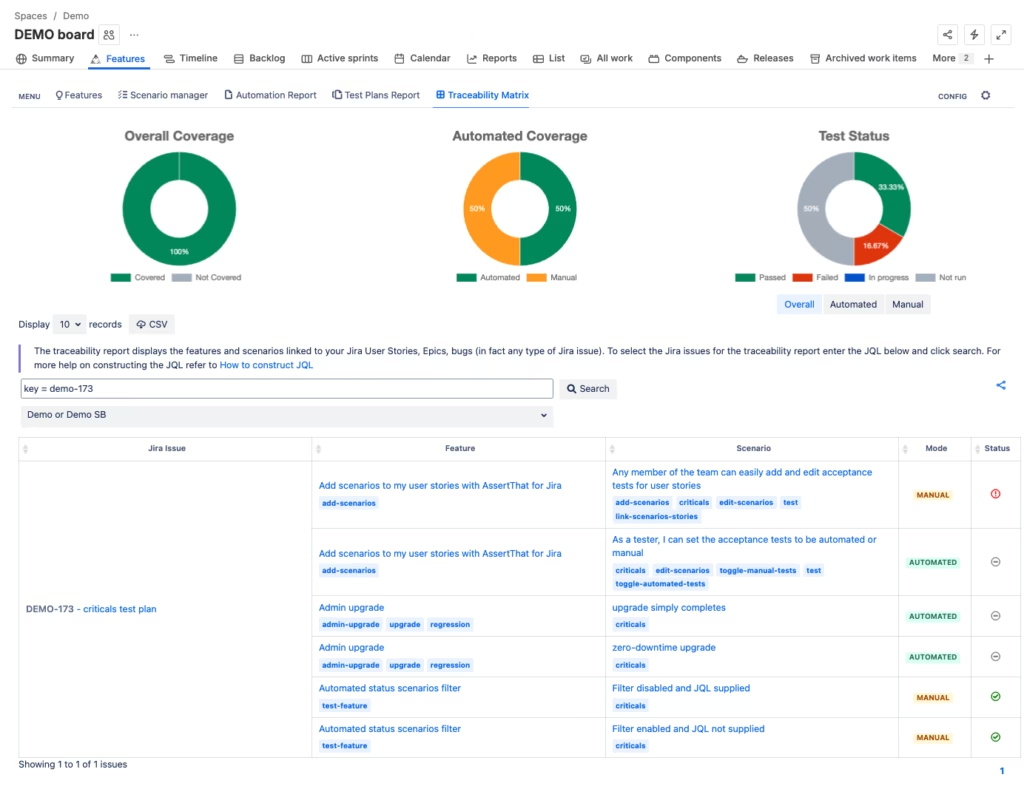
When scaling BDD, delivery leads and product owners need confidence that behaviour is being validated consistently across teams. Without clear traceability and execution visibility, it becomes difficult to assess risk or make informed release decisions.
Making BDD scenarios and validation status visible in Jira allows teams to move from assumption-based reporting to evidence-based delivery as scale increases.
Final Thoughts
Scaling BDD in Jira is not about doing more BDD — it is about doing it more deliberately and visibly.
When behaviour remains visible, traceable, and collaboratively owned, BDD continues to support alignment and confidence as teams grow. When it becomes fragmented or hidden, its value quickly fades.
Agile teams that recognise this early are far more likely to sustain BDD as a meaningful part of delivery, rather than letting it quietly disappear under delivery pressure.